Grease Trap Cleaning in Columbus, OH
Need routine pumping, grease trap cleaning, or help with a backed-up trap? Call to discuss service availability, pricing, and scheduling in the Columbus area.
Call now(614) 858-3919- Indoor grease traps and in-ground interceptors
- Routine pumping, backups, and inspection preparation
- Restaurants, schools, hotels, hospitals, and food plants
How It Works
- 1Share Your ZIP Code Follow a short automated prompt to connect with a provider serving your area.
- 2Describe Your Needs Tell the provider about your grease trap or interceptor, the problem, and how urgently you need service.
- 3Confirm Pricing and Scheduling Discuss pricing and scheduling directly with the provider before work begins.
Which situation are you in?
Most kitchens call for one of four reasons. Find yours.
Backed up or overflowing
A full trap stops separating grease, and water backs up through the floor drain or sink. Before the provider arrives:
- Stop grease going down drains. Scrape plates and pans into the trash and keep fryer oil out of every sink.
- Shut off fixtures that feed the trap. Pause dishwashers, prep sinks and mop sinks connected to it so it does not overflow further.
- Keep staff away from the overflow. Grease water is slippery and unsanitary. Block off the area and keep food and clean equipment clear.
- Photograph the trap and find the last pumping date. Providers and inspectors both ask for it.
Smell or slow drains
A sour smell near the floor drain, or sinks that drain slowly after the lunch rush, usually means the trap is near its limit. Columbus recommends cleaning before an interceptor reaches 25 percent of its capacity. Pumping now avoids the overflow and the cleanup.
Call to check availability →Inspection due or notice received
Columbus FOG inspectors and Columbus Public Health can ask to see your FOG Best Management Plan and the cleaning log for each interceptor. If the log has gaps or the last cleaning was months ago, get the trap pumped and the log entry made before the visit, and ask the provider for the disposal manifest.
Call to check availability →Routine schedule, new opening, or several locations
Opening a kitchen? Columbus requires every food service operation in its sewer service area to keep a written FOG Best Management Plan and a cleaning log, so line up a provider before you open. Running several sites? Ask the provider whether they can put all locations on one schedule with one set of records. Already set up? A standing schedule keeps you under the 25 percent line without having to remember.
Call to check availability →Ready to Arrange Grease Trap Service?
Discuss your service needs and next steps with a provider serving your area.
Grease trap and interceptor services
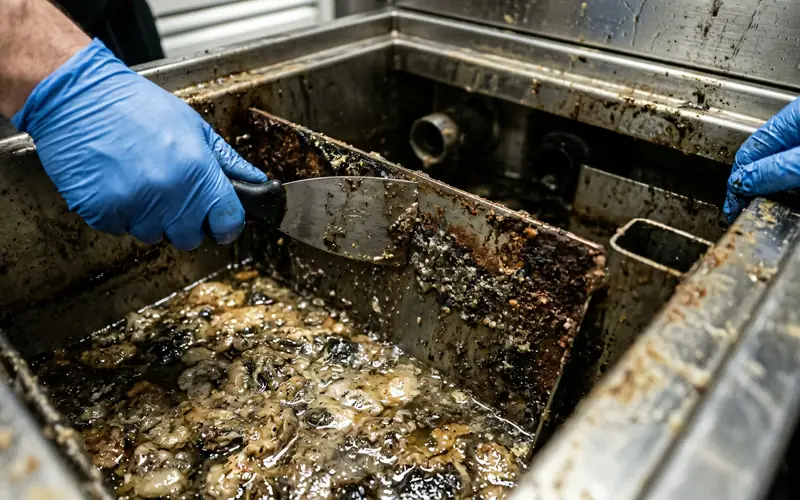 Indoor trapsGrease Trap CleaningScraping walls and baffles, clearing solids and the inlet and outlet, beyond a basic pump-out.Learn about cleaning →
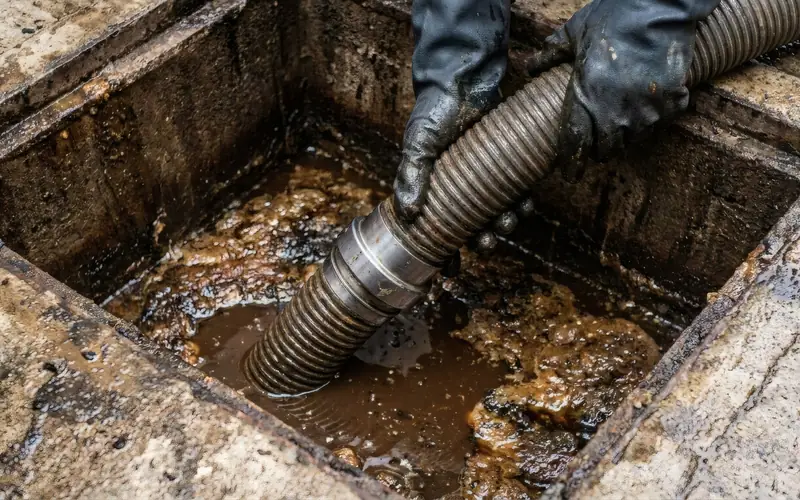 Indoor trapsGrease Trap PumpingRoutine pump-outs that keep your trap under fullness limits and your records current.Learn about pumping →
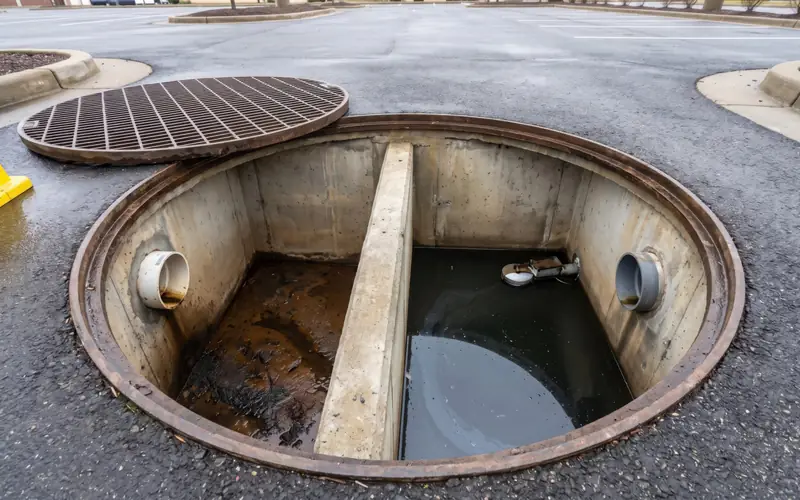 In-ground interceptorsGrease Interceptor CleaningJetting, solids removal and a check of tees, baffles and lids on large outdoor tanks.Learn about interceptor cleaning →
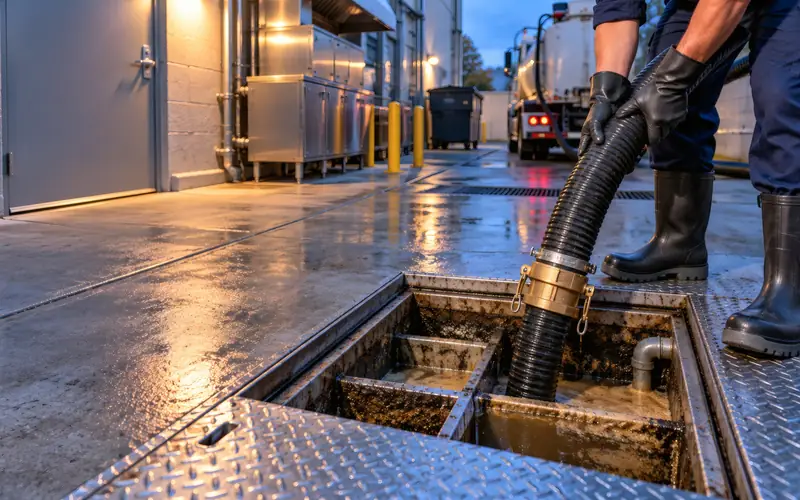 In-ground interceptorsGrease Interceptor PumpingVacuum truck pump-outs on a regular schedule, with records for your inspector.Learn about interceptor pumping →
Who uses this service
Any kitchen with a fryer, grill or dishwasher sends grease to a trap or interceptor.
- Restaurants and cafes
- Fast food
- School and university cafeterias
- Hotels
- Hospitals and care homes
- Food processing plants
- Grocery delis and bakeries
- Caterers and commissaries
Columbus grease trap rules at a glance
A plain-language summary. Always confirm current requirements with the local authority before relying on them.
Who regulates
Columbus Water & Power's Division of Water Reclamation runs the FOG Reduction Program for food service operations in Columbus and the communities that contract with the city for wastewater treatment.
What every kitchen must keep
A written FOG Best Management Plan and a cleaning log for each interceptor, kept on site for at least three years and shown to inspectors on request.
What the hauler must do
Under Rule 26-02, effective April 21, 2026, the hauler must remove the full contents, including buildup on baffles and walls, and fill in your cleaning log or give you the details in writing.
How often
There is no set interval. Follow the manufacturer's guidance and your buildup, and clean before an interceptor passes 25 percent of its capacity. New and remodeled kitchens must be designed for service at least every 30 days (concrete) or 90 days (degradation-resistant units).
What a blockage costs
Director's Rule 15-04 sets a minimum $2,000 cost-recovery charge for a typical sewer blockage caused by improper grease disposal. It covers the city's response; it is not a fine for a missed cleaning.
Not sure where your kitchen stands?
Call with your last pumping date and ask what your log should show. Pricing is confirmed before work starts.
Call (614) 858-3919Sources: City of Columbus, Fats, Oils, and Grease Control · Rule and Regulation 26-02 (PDF) · FOG Best Management Plan packet (PDF)
Grease trap or grease interceptor?
You do not need to know which you have before calling, but this helps you describe it.
- Location
- Indoors, under a sink or set in the kitchen floor
- Flow rating
- Roughly 20 to 100 gallons per minute
- Which kitchens
- Cafes, small restaurants, bars, coffee shops
- Typical pumping interval
- Every 1 to 4 weeks for most busy kitchens
- Location
- Outdoors, buried below a parking lot or yard
- Typical size
- Roughly 500 to several thousand gallons
- Which kitchens
- High-volume restaurants, schools, hospitals, food plants
- Typical pumping interval
- Every 1 to 3 months, depending on volume and local rules
Questions to ask before you hire a pumper
Providers are independent, so it pays to ask. These six questions cover what inspectors usually look for.
- 1Are you a permitted grease waste hauler?Many local authorities require haulers to hold a specific permit for grease waste.
- 2Will I get a disposal manifest?The manifest shows where the waste was taken. Keep it with your records.
- 3Is it a full pump-out or skimming?Skimming leaves settled solids behind. Ask for the full contents to be removed.
- 4Do you check baffles and the outlet?Broken baffles or a missing outlet tee let grease pass straight through.
- 5Can we set a regular schedule?A standing schedule keeps you under fullness limits without having to remember.
- 6Will you fill in my cleaning log?Rule 26-02 requires it, or the date, grease and solids removed and condition in writing.
What’s different about grease traps in Columbus, OH
Where your kitchen sits in Columbus, and how old the building is, shape the setup you're working with.
Older neighborhoods share one pipe
Parts of downtown, German Village, Victorian Village and the OSU campus area are served by combined sewers, where stormwater and wastewater flow through a single pipe. That was the standard when those areas were built.
Newer kitchens lean toward outside interceptors
Columbus has said new construction and kitchen remodels will be required to install an outside interceptor where feasible. Existing kitchens can keep their current equipment until they remodel.
Bigger units, fewer visits
The city notes that larger outside interceptors need less frequent maintenance. That's why an older storefront with a small indoor trap often needs grease trap pumping more often than a newer building needing grease interceptor pumping.
Sources: City of Columbus, Understanding Our Sewer System · City of Columbus, Sewer FAQs
Service area
Areas served in Columbus
- Downtown
- Short North
- German Village
- Arena District
- Easton
- Polaris
- Clintonville
- Grandview
Frequently Asked Questions
How often should a grease trap be cleaned?
Cleaning frequency depends on your kitchen’s wastewater volume, menu, grease production and the type of trap you have. Local requirements may also apply. A service provider can help you determine an appropriate cleaning schedule for your equipment.
What does grease trap cleaning cost?
The cost depends on the size of your trap or interceptor, the amount of waste, accessibility and the service required. Call to discuss your equipment and ask the provider for a quote before agreeing to any work.
Do providers clean grease interceptors as well as indoor grease traps?
Some providers handle both indoor grease traps and larger outdoor grease interceptors. When you call, explain which type of equipment you have and share its size or capacity if known, so the provider can confirm whether they can handle the job.
What happens if I delay grease trap cleaning?
Excess grease and solids can reduce your trap’s effectiveness and contribute to slow drains, unpleasant odors and backups. Poor maintenance can also create compliance issues. Regular cleaning helps keep your system working as intended.
How long does grease trap pumping take?
The time required depends on the trap’s size, the amount of accumulated waste, accessibility and the work involved. Tell the provider what type of equipment you have so they can give you a more useful estimate.
What records will a FOG inspector ask for?
Your FOG Best Management Plan and the cleaning log for each interceptor: the date cleaned, the gallons or percent of grease and solids removed, and whether the interceptor’s condition was satisfactory. Keep them on site for at least three years, and keep the hauler’s disposal manifests with them.
Who will I speak to when I call?
Our service connects callers with independent grease trap service providers. A short automated prompt asks for your ZIP code and routes your call to a provider serving your area. We do not perform grease trap cleaning or employ the technicians. The provider confirms service availability, pricing and scheduling.
Need Grease Trap Cleaning in Columbus, OH?
Connect with an independent service provider serving your area.
Call now(614) 858-3919