Grease traps and local food service businesses
Kitchens in the Village of Shawnee Hills follow the Columbus grease rules, and record keeping is specific.
Each interceptor needs its own cleaning log, and after ten cleanings an authorized representative signs the log and starts a new one. Keep every log with your grease management plan for at least three years, on site, where Columbus Public Health or city sewer staff can see it on request.
Grease trap services in Shawnee Hills, OH
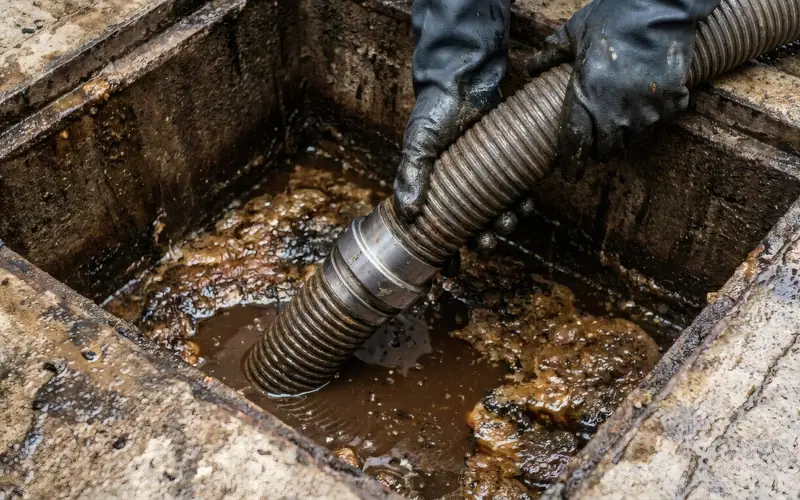
Grease Trap Pumping
Empties grease, solids and wastewater before the trap reaches its limit. Learn more about grease trap pumping.
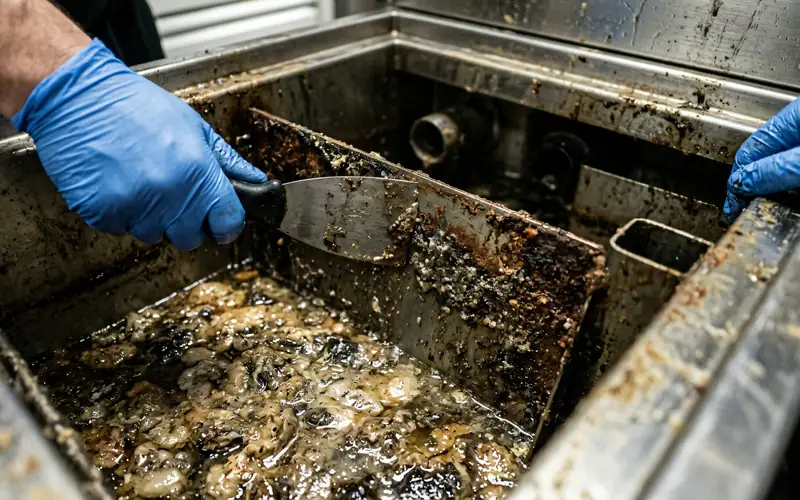
Grease Trap Cleaning
Removes hardened grease and solids that pumping can leave behind. Learn more about grease trap cleaning.
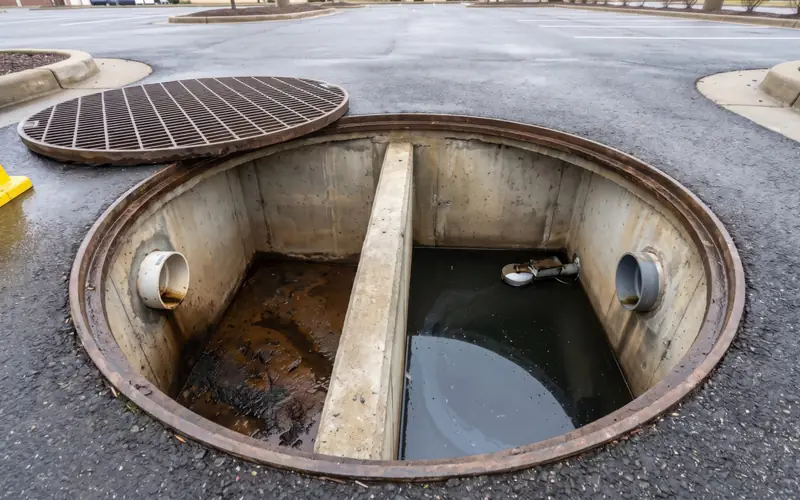
Grease Interceptor Cleaning
Jetting, solids removal and a check of tees, baffles and lids. Learn more about interceptor cleaning.
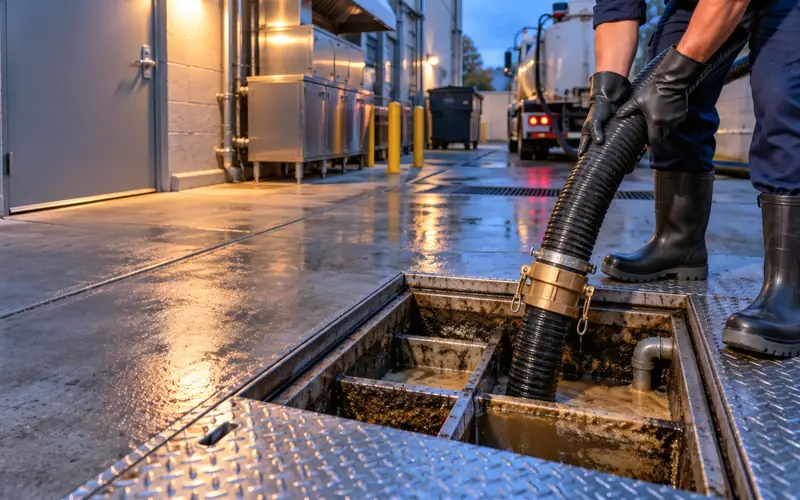
Grease Interceptor Pumping
Vacuum truck pump-outs for large tanks on a regular schedule. Learn more about interceptor pumping.
Local grease trap requirements
Shawnee Hills contracts with Columbus for sewer service, so the Columbus FOG Reduction Program, run by Columbus Water & Power, applies.
Under the Columbus program, each kitchen keeps a written FOG Best Management Plan and a cleaning log for each interceptor on site for at least three years, every cleaning must remove the entire contents, and the city recommends cleaning before an interceptor passes 25 percent of its capacity.
Read the full Columbus grease trap rules
Source: City of Columbus, contract communities summary table
Nearby service areas
The same number reaches providers serving nearby areas. Businesses with more than one location can call once per site and enter each ZIP code.
Common grease trap questions
How often do Shawnee Hills restaurants need grease trap pumping?
It depends on trap size, menu and volume, along with local requirements. Columbus does not set one interval for every kitchen. Cleaning should follow the manufacturer's instructions and how fast grease builds up, and new or remodeled kitchens need interceptors designed to go no more than 30 days between services for concrete units, or 90 days for units made of materials that resist degradation. A provider can measure your trap and suggest a schedule.
Do providers serving Shawnee Hills handle in-ground interceptors?
Many do. Tell the provider whether you have an indoor trap or an outdoor interceptor, and its size if you know it, so they can confirm they have the right equipment. Call to check availability.
Who will I be speaking to when I call?
A short automated prompt asks for your ZIP code, then routes your call to an independent grease trap service provider covering Shawnee Hills. We are a connection service and do not perform the work. The provider you speak with sets the price, schedule and terms.